
Motor drives are essential components in industrial machinery,automation equipment,robotics,HVAC systems,and many household devices.Buyers and engineers frequently ask whether an AC Power Supply can be used for motor drives,and the answer depends largely on the type of motor and the required voltage configuration.Motor technology varies widely,and understanding the differences between AC motors,DC motors,servo motors,and stepper motors is the first step in determining the correct power source for any application.In general,an AC Power Supply can be used for motor drives,but the conditions must match the electrical requirements of the specific motor and controller.
AC motors are naturally compatible with AC Power Supply units because they are designed to run directly on alternating current.Many industrial systems operate with 110V,220V,or 380V AC,and the motor can be powered directly as long as the voltage,frequency,and phase match the motor’s specifications.In these cases,an AC Input Power Supply or the standard AC mains can drive the motor without requiring additional conversion.This makes AC motors suitable for pumps,compressors,fans,blowers,conveyor belts,and other high-power mechanical systems.The process is straightforward:as long as the AC Power Supply delivers the correct phase—either single-phase or three-phase—the motor will run efficiently and safely.
DC motors,however,require a completely different setup.They cannot run directly from an AC Power Supply because DC motors depend on steady and regulated direct current.In this case,users must convert AC into DC using an AC/DC Power Supply or an AC Power Adapter.These devices transform the incoming alternating current into stable DC output while providing voltage regulation,overcurrent protection,and short-circuit protection.This type of power conversion is essential for electronics,handheld tools,portable devices,and small industrial systems.When the correct AC/DC Power Supply is used,DC motors can deliver consistent torque and speed control without risk of electrical damage.
Servo motors and stepper motors are even more specialized.They require precisely regulated DC input to achieve accurate positioning and smooth motion control.These motors operate through dedicated drivers or controllers that receive DC power.Therefore,when powering servo or stepper systems,AC power must always be converted using an AC/DC Power Supply or an AC Voltage Converter,depending on the required voltage level.This conversion process ensures the motor receives clean,stable power with minimal electrical noise—critical for CNC machines,robotics,automation lines,medical devices,and laboratory instruments.In these precise applications,unstable AC input can cause motor vibration,missteps,or even immediate hardware failure.
Choosing the correct power supply type depends on more than motor category alone.Engineers must consider voltage rating,current capacity,startup current,operating environment,and the load conditions of the motor.Motors typically draw two to three times their rated current during startup,which means the selected AC Power Supply or AC/DC Power Supply must offer adequate current headroom.When selecting a power unit for motor drives,the power supply must always deliver more current than the motor’s maximum draw to avoid overheating,voltage drop,or system shutdown.Likewise,frequency plays an important role in AC motors;a 50 Hz motor connected to a 60 Hz supply will run faster than intended,while the reverse may cause torque loss or irregular operation.
International users often need an AC Voltage Converter to match regional voltage differences,such as converting 110V to 220V or vice versa.Global equipment installations frequently depend on voltage converters to power motor-driven machines safely.Additionally,any imported equipment or exported industrial machine must ensure compatibility between its AC Input Power Supply and the country’s voltage standards.
Safety is a major concern when powering motor drives with AC.Improper voltage,loose wiring,inconsistent grounding,or an undersized AC Power Supply can cause overheating,motor burnouts,driver failure,or fire hazards.Adding protective devices such as fuses,overvoltage regulators,insulated connectors,and circuit breakers significantly reduces risk.Modern AC/DC Power Supply units come with built-in protections including thermal shutdown,overload protection,and short-circuit shielding,making them a smart choice for sensitive motor applications.
Motor drive systems powered by the correct AC or AC/DC solution are used in many fields,including industrial automation,robotics manufacturing,conveyor systems,HVAC devices,3D printers,packaging machines,testing instruments,actuators,and home appliances.Any equipment containing motors relies heavily on the stability and reliability of its power source.A properly selected AC Power Supply or AC/DC Power Supply not only ensures smooth operation but also extends motor lifespan,prevents downtime,and increases factory productivity.
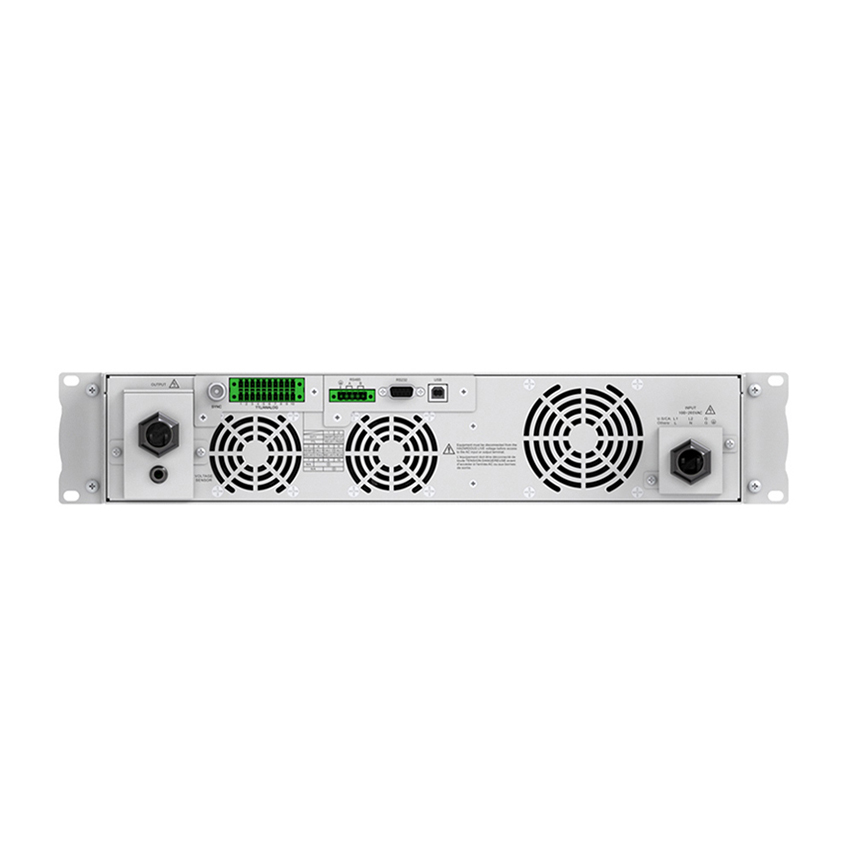
In summary,an AC Power Supply can indeed be used for motor drives,but only when the motor type is compatible with AC input.AC motors can be powered directly using an AC Power Supply or AC Input Power Supply.DC motors,servo motors,and stepper motors require AC/DC conversion through an AC Power Adapter or AC/DC Power Supply to produce the appropriate DC voltage.An AC Voltage Converter may be required when the equipment must adapt to different international power standards.Choosing the right power supply is crucial to ensure safe,efficient,and long-lasting operation.Matching voltage,current,frequency,and startup requirements ensures that the motor and its driver work at peak performance without risk of damage.With the proper power configuration,motor drives can operate reliably across industrial,commercial,and residential applications.