
When selecting an AC power supply for industrial equipment,buyers often face a common question:should they choose a Series AC Power Supply or a traditional single output AC power supply?While both serve the essential purpose of providing stable electrical power,their design concepts,application flexibility,and performance characteristics are quite different.Understanding these differences is critical for engineers,system integrators,and procurement managers who want to ensure long-term reliability and efficiency.
A Series AC Power Supply is designed to deliver multiple outputs connected in series,allowing higher voltage levels or more flexible voltage combinations.In contrast,a single output AC power supply provides one fixed output voltage,which is sufficient for simpler systems but can become limiting in more complex industrial environments.This fundamental structural difference already defines how each type is used in real-world applications.
In industrial automation,control cabinets,and test systems,voltage flexibility is often a decisive factor.A Series AC Power Supply allows multiple output modules to be connected in series,making it easier to achieve customized voltage requirements without redesigning the entire power architecture.For example,when equipment requires higher voltage for specific components,a Series AC Power Supply can be configured accordingly,while a single output AC power supply would require additional converters or transformers.This flexibility often translates into lower system complexity and reduced installation cost.
Another major difference lies in system scalability.With a Series AC Power Supply,system designers can expand or adjust voltage outputs as equipment requirements evolve.This is particularly valuable in industries where machines are frequently upgraded or repurposed.A single output AC power supply,on the other hand,is typically selected for a fixed application.Once installed,changes to voltage or power capacity often require complete replacement,which increases downtime and operational costs.
Efficiency and power stability are also important considerations.Modern Series AC Power Supply solutions are engineered with advanced regulation and protection features that maintain stable output even under fluctuating loads.This stability is crucial for sensitive industrial electronics,control systems,and communication modules.Single output AC power supplies can also be efficient and stable,but they are generally optimized for narrower operating conditions.When load conditions vary significantly,a Series AC Power Supply often performs better in maintaining consistent output levels.
From a protection and safety perspective,Series AC Power Supply units typically integrate comprehensive protection functions such as over-voltage,over-current,short-circuit,and thermal protection across multiple outputs.This layered protection approach helps safeguard both the power supply and connected equipment.Single output AC power supplies usually include similar protections,but their scope is limited to one output channel,which may not be sufficient for complex multi-load systems.
Installation and wiring complexity is another area where differences become apparent.At first glance,a single output AC power supply seems simpler to install because of fewer connections.However,in systems that require multiple voltage levels,this simplicity quickly disappears as additional components are added.A Series AC Power Supply,while slightly more complex initially,can actually simplify overall system wiring by consolidating multiple voltage needs into one integrated solution.
Cost comparison is often misunderstood.A single output AC power supply usually has a lower upfront unit price,making it attractive for basic applications.However,when evaluating total system cost,including auxiliary components,maintenance,and potential upgrades,a Series AC Power Supply can be more cost-effective over time.Buyers focused on long-term performance and scalability often find that Series AC Power Supply solutions provide better overall value.
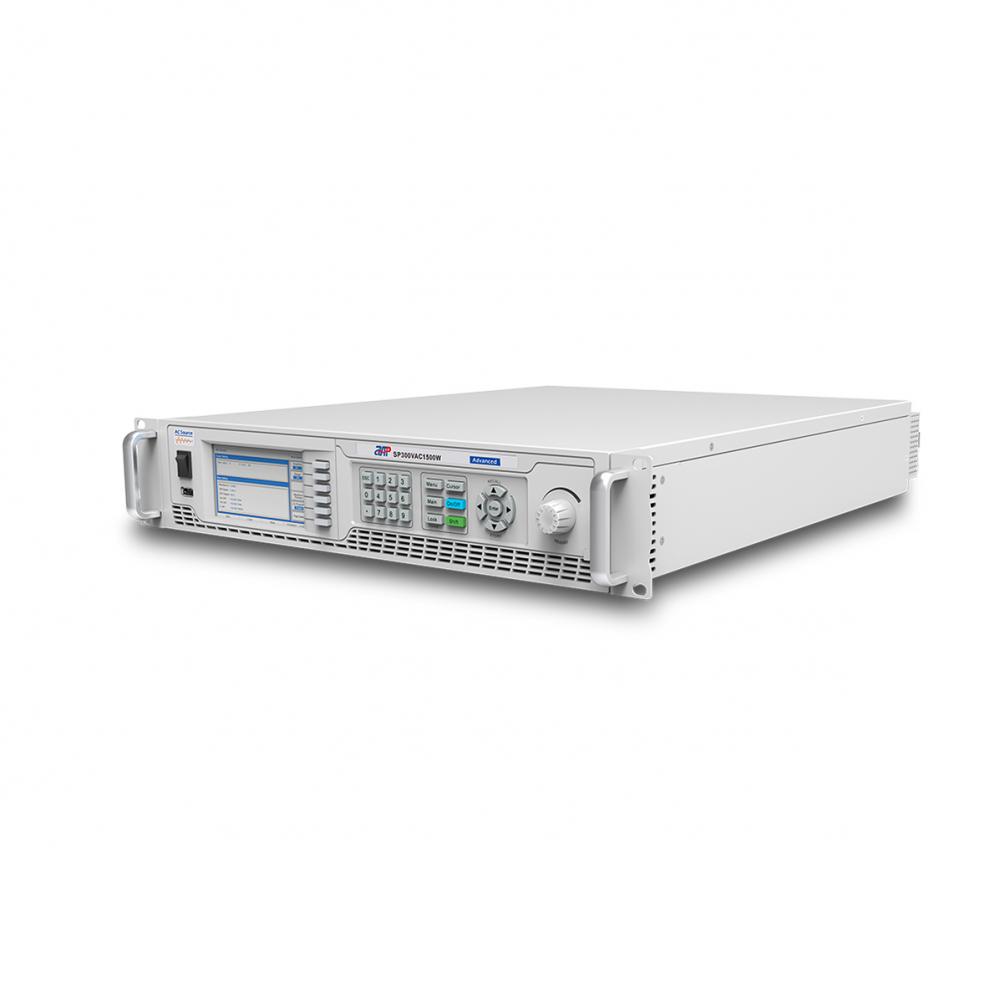
Reliability in industrial environments is another critical factor.Series AC Power Supply products are commonly designed for harsh operating conditions,including wide temperature ranges,vibration,and electrical noise.This makes them suitable for factories,automation lines,and outdoor installations.While single output AC power supplies can also be industrial-grade,they are more commonly used in stable,less demanding environments.
In summary,the difference between a Series AC Power Supply and a single output AC power supply is not just about the number of outputs.It is about flexibility,scalability,system stability,and long-term efficiency.For simple,fixed applications,a single output AC power supply may be sufficient.However,for modern industrial systems that demand adaptability,reliability,and efficient power management,a Series AC Power Supply is often the preferred choice.Understanding these distinctions helps buyers make informed decisions and select power solutions that support both current and future operational needs.