

What Is an Adjustable AC Power Supply?
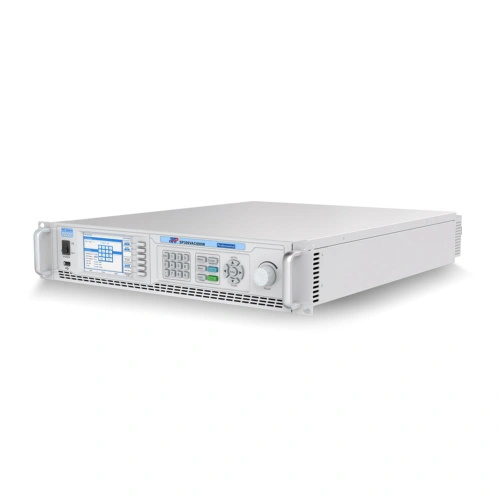
An Adjustable AC Power Supply is an electrical device designed to convert incoming electrical power into an AC output with user-controlled voltage and frequency. Depending on the model, users can adjust output voltage from low levels to the rated voltage and even beyond for specific testing purposes.
Unlike conventional wall outlets that provide a fixed voltage and frequency, an adjustable unit enables engineers to reproduce various electrical environments. For example, products intended for global markets may need to operate under 100V/50Hz, 120V/60Hz, or 230V/50Hz conditions. An adjustable power supply makes these tests possible without changing the local electrical infrastructure.
Modern systems often integrate digital controls, LCD touchscreens, programmable sequences, and communication interfaces, making them suitable for automated production and laboratory environments.
How Does an Adjustable AC Power Supply Work?
The operating principle begins with converting the incoming AC power into DC through a rectifier. The DC power is then processed by high-speed switching circuits and an inverter that recreates a clean AC waveform. A digital controller regulates the output voltage and frequency according to the user's settings.
Many advanced models include waveform generation technology capable of producing sine waves, square waves, or customized waveforms for specialized testing applications.
A Programmable AC Power Supply takes this process one step further by allowing users to create automatic testing programs. Engineers can schedule voltage ramps, frequency changes, startup simulations, and power interruption tests without manual adjustments.
Main Features of an Adjustable AC Power Supply
An adjustable AC power supply offers several practical advantages:
- Adjustable output voltage across a wide operating range
- Variable output frequency for international power simulation
- Stable sine wave output with low distortion
- High measurement accuracy
- Digital monitoring of voltage, current, power, and frequency
- Built-in overload, overcurrent, overvoltage, and short-circuit protection
- Remote control through USB, LAN, RS232, or GPIB interfaces
- Programmable testing functions for automated production
These features make adjustable AC power supplies suitable for both research laboratories and industrial manufacturing.
Applications of Adjustable AC Power Supplies
Adjustable AC power supplies are used across numerous industries where stable and flexible electrical testing is required.
Electronic Product Testing
Manufacturers verify that televisions, home appliances, communication equipment, and consumer electronics operate correctly under different voltage conditions.
Industrial Equipment
Automation controllers, industrial motors, power modules, and production equipment require stable power during development and inspection.
Research Laboratories
Universities and research institutes use adjustable AC power supplies to conduct electrical experiments and develop new technologies.
Renewable Energy
Solar inverters, energy storage systems, and power conversion equipment require precise AC simulation during product validation.
Automotive Electronics
Electric vehicle chargers, onboard power systems, and automotive electronic modules are tested under different grid conditions before mass production.
Adjustable AC Power Supply vs Fixed AC Power Supply
| Feature | Adjustable AC Power Supply | Fixed AC Power Supply |
|---|---|---|
| Output Voltage | Adjustable | Fixed |
| Frequency | Adjustable | Fixed |
| Testing Flexibility | High | Limited |
| Automation | Supported | Basic |
| International Testing | Excellent | Limited |
| Laboratory Use | Yes | No |
The adjustable model provides significantly greater flexibility, making it the preferred choice for professional testing environments.
How to Choose the Right Adjustable AC Power Supply
Selecting the right model depends on several technical factors.
First, determine the required output voltage and frequency range based on your products.
Second, calculate the maximum output power required during testing.
Third, consider the waveform quality, especially if sensitive electronic devices will be tested.
Communication interfaces are also important for automated production lines.
If your testing process involves repetitive procedures, selecting a Programmable AC Power Supply can improve efficiency and reduce manual operation.
Working with an experienced AC Power Supply Manufacturer can help ensure the selected system matches your application requirements.
Why Work with a Professional Manufacturer?
Reliable suppliers provide more than just equipment. They also offer technical consultation, customization, software integration, calibration support, and after-sales service.
An experienced AC Power Supply Company understands the testing requirements of different industries and can recommend appropriate solutions based on voltage range, power capacity, control functions, and certification requirements.
Choosing a trusted AC Power Supply Supplier also ensures stable product quality, faster technical support, and long-term availability of replacement parts.
Many international customers prefer purchasing directly from an established AC Power Supply Factory because factory-direct cooperation often provides greater flexibility for customization and production scheduling.
Conclusion
An Adjustable AC Power Supply provides flexible voltage and frequency control for product development, quality inspection, and industrial testing. Its ability to simulate different electrical environments makes it an essential tool for laboratories, manufacturers, and research organizations. Whether you require manual adjustment or a fully Programmable AC Power Supply, working with an experienced AC Power Supply Manufacturer, reliable AC Power Supply Supplier, professional AC Power Supply Company, or established AC Power Supply Factory helps ensure you receive equipment that supports accurate testing, reliable performance, and future production needs.