

Battery testing requires precise control,stable output,and accurate measurement,making APM Power a popular choice for laboratories,battery manufacturers,and energy storage developers.Understanding how to use APM Power for battery testing helps ensure more reliable results and a smoother testing process.
APM Power provides programmable voltage and current output,allowing users to simulate various charging and discharging conditions.When performing battery testing,the first step is to set safe voltage and current limits based on the battery’s specifications.APM Power’s high-precision control ensures that the parameters remain stable during the entire charging or discharging cycle,preventing overheating or overcharging.
Another key advantage of APM Power is its dynamic mode,which supports fast response and adjustable waveform output.This is essential for testing battery performance under fluctuating loads,such as EV power systems or portable electronics.By programming step changes or long-duration cycling,users can evaluate how the battery behaves in real operating conditions.Recorded data such as voltage,current,and capacity retention can be exported for further analysis.
APM Power also supports automated test sequences that simplify repetitive battery-cycle evaluations.Users can set up multi-step charging profiles,constant-current/constant-voltage modes,and timed discharge routines.This automation reduces manual operation while improving accuracy and repeatability.For safety,APM Power includes built-in protection functions such as over-voltage,over-current,and temperature safeguard mechanisms,ensuring secure testing even during high-power experiments.
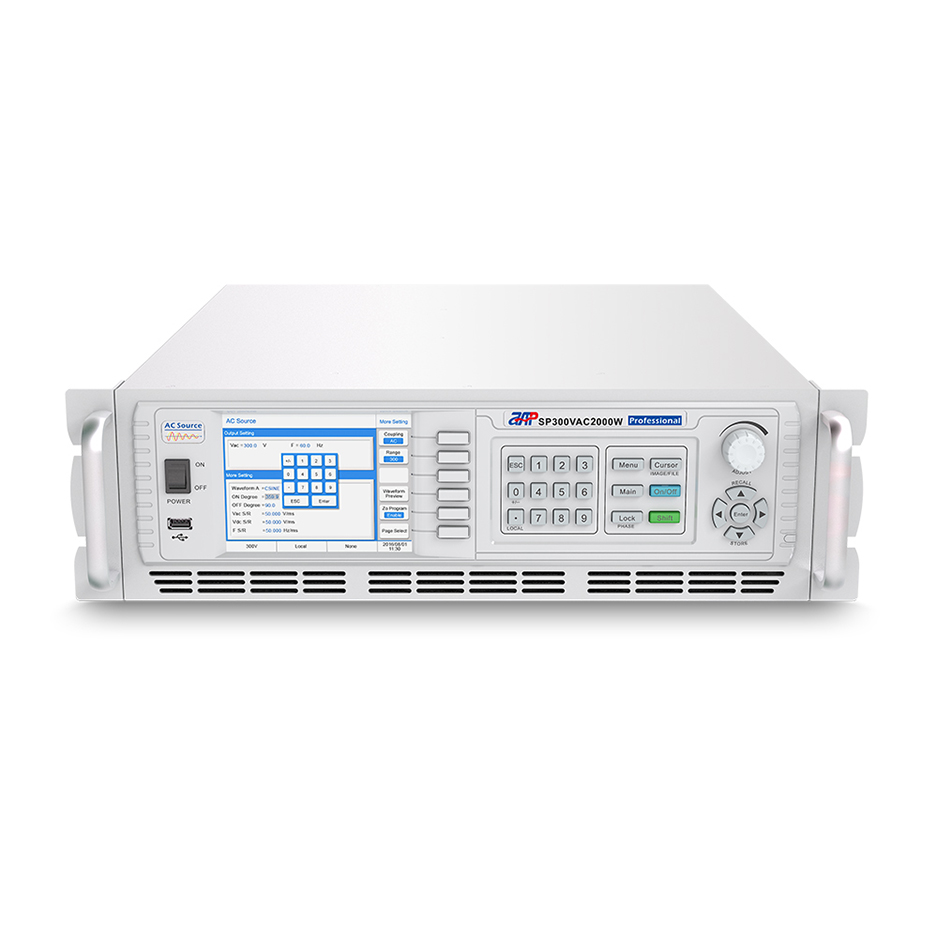
APM Power is commonly used in lithium-ion battery development,energy-storage pack verification,consumer electronics testing,and EV battery module evaluation.Its stable output,programmable functions,and real-time monitoring capabilities help engineers achieve consistent results.With proper setup and parameter control,APM Power becomes a powerful tool for analyzing battery cycle life,performance stability,and safety characteristics.
In conclusion,using APM Power for battery testing offers a reliable,accurate,and efficient solution for laboratories and manufacturers.Its programmable features,automation capability,and high-precision control make it a strong choice for a wide range of battery evaluation applications.