

When it comes to electronics testing and development,precision is everything.Engineers and hobbyists alike rely on a DC Lab Power Supply to deliver stable and reliable voltage and current.Among these devices,a High Precision DC Lab Power Supply is often the tool of choice,particularly for applications requiring accurate and consistent output.But how accurate is a high precision model,and why does it matter for your projects?
A 32V Lab Power Supply is widely used in laboratories,educational settings,and manufacturing environments because it offers a sufficient voltage range for testing most electronics without the complexity of higher-voltage systems.Accuracy in a DC Lab Power Supply is defined by its ability to maintain the voltage and current settings within a specified tolerance.For high precision devices,this tolerance can be as low as±0.01%,making them suitable for sensitive applications like semiconductor testing,calibration tasks,or precision instrumentation.
The accuracy of a 32V Lab Power Supply depends on several factors.First,the internal components,such as high-quality voltage regulators and precision resistors,play a critical role.High precision units often employ advanced circuitry that minimizes noise and voltage fluctuations.Second,the device’s digital interface and readout can impact perceived accuracy.Modern digital displays allow engineers to monitor output in real-time,helping to ensure that voltage remains within the desired range.In contrast,older analog meters may introduce slight errors that accumulate in sensitive applications.
Another consideration is environmental conditions.Temperature fluctuations can affect the stability of a DC Lab Power Supply,as components expand or contract,slightly altering their electrical properties.Many high precision lab power supplies include temperature compensation and thermal management features to mitigate these effects.Additionally,some models offer programmable output settings and memory functions,allowing repeated experiments to be conducted under identical electrical conditions.
The importance of accuracy extends beyond measurement.Using a precise 32V Lab Power Supply ensures repeatability in testing,which is crucial for research and quality control.When testing circuit boards or prototypes,even minor deviations in voltage can lead to incorrect results,misdiagnosis of issues,or damage to sensitive components.Therefore,investing in a high precision device not only improves efficiency but also protects valuable equipment.
High precision DC Lab Power Supply units are typically designed for long-term reliability.Many feature advanced protections against overvoltage,overcurrent,and short circuits.These safeguards ensure that your experiments remain safe and reproducible.Furthermore,they allow engineers to push the boundaries of design,knowing that the power source will maintain stable output throughout complex testing procedures.
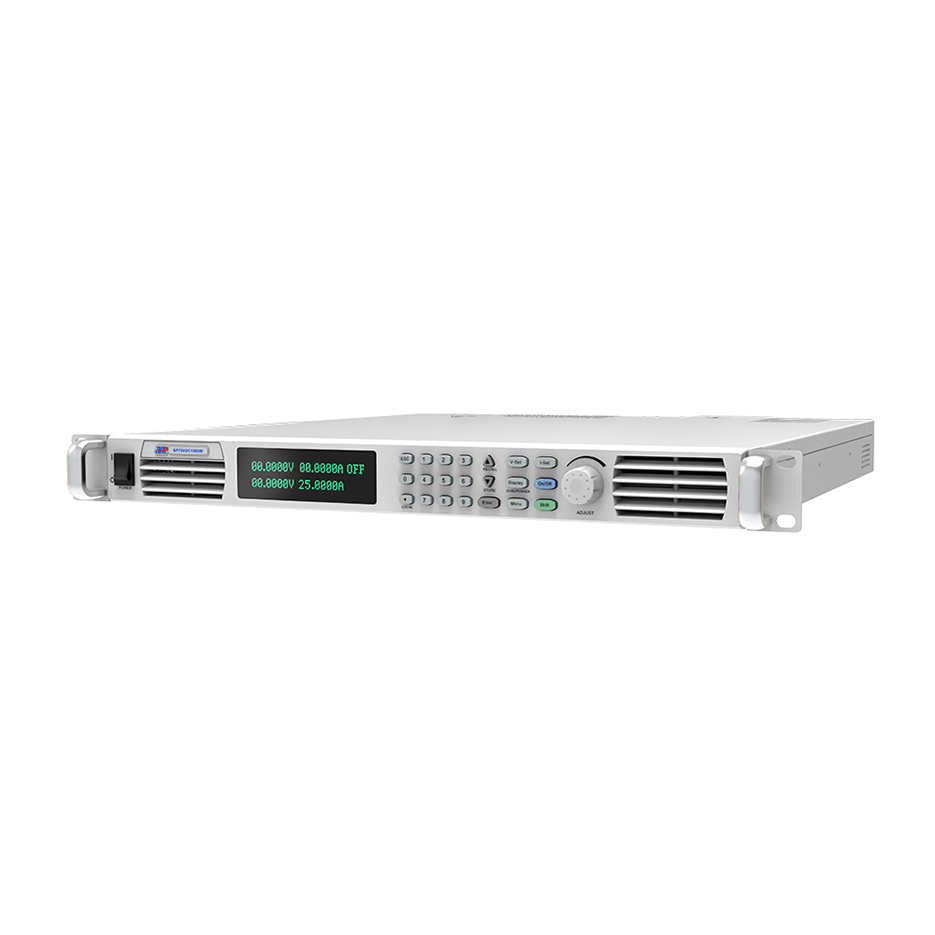
In practical terms,a 32V Lab Power Supply can handle a variety of applications,from powering low-voltage electronics to simulating battery loads for small devices.High precision models are often used in calibration laboratories,where instruments need to be tested against a known reference.By providing a stable and accurate output,these lab power supplies help maintain the integrity of experimental data and ensure compliance with industry standards.
In summary,the accuracy of a high precision DC Lab Power Supply is a key consideration for anyone involved in electronics testing,research,or production.With a tolerance that can reach±0.01%,these devices provide reliable,stable,and repeatable power for sensitive projects.Choosing a high-quality 32V Lab Power Supply ensures not only accurate testing results but also long-term protection and efficiency for your equipment.Whether you are a professional engineer or an electronics hobbyist,understanding the capabilities and limitations of your lab power supply is essential for achieving precise and dependable outcomes.