

Testing and calibrating a High Precision DC 32V Lab Power Supply is essential for ensuring stable,accurate,and safe performance in laboratory environments,R&D departments,and electronics manufacturing.Because engineers often rely on precise voltage and current outputs during prototype development and component validation,a poorly calibrated power supply can easily cause measurement errors,device failures,or long-term reliability issues.For companies that frequently work with sensitive circuits or automotive electronics,maintaining high accuracy is no longer optional—it is a core requirement of quality control.
Before starting the calibration process,the power supply must be placed in a controlled environment with stable temperature and ventilation.High precision power supplies are sensitive to temperature drift,so letting the unit warm up for 10 to 20 minutes is recommended.During this period,the internal voltage reference and regulation circuitry reach a steady state.Only after the warm-up should engineers begin the actual testing procedure.
The first step is to verify the no-load output accuracy.Using a certified digital multimeter or a bench-top reference meter with at least 0.01%accuracy,measure the voltage at several preset points such as 5V,12V,24V,and the maximum 32V output.A High Precision DC 32V Lab Power Supply should maintain an error margin within its rated specification,often below±0.05%.If deviations exceed the manufacturer’s tolerance,calibration adjustments must be made through internal trimmers or the system’s digital control interface.
After validating voltage accuracy under no-load conditions,the next step is to apply incremental load testing.Many engineers overlook load regulation,but it is one of the most important indicators of power supply performance.By gradually connecting electronic loads at 10%,30%,50%,and up to 100%of the power supply’s rated current,users can observe how the voltage behaves under stress.A high-quality 32V lab power supply should maintain voltage stability even when the load changes rapidly.Any sudden dips or spikes may indicate aging components,weakened capacitors,or issues with the voltage feedback loop.
Current accuracy testing is equally essential.Set the power supply to Constant Current mode,commonly referred to as CC mode,and slowly increase the load until the power supply switches from voltage regulation to current regulation.The output reading should match the value displayed on the power supply panel.High precision units include internal shunt resistors that are factory calibrated,but over time,thermal drift and component aging may require recalibration.Using a trusted ammeter or precision current meter,adjust the internal calibration settings if the measured value falls outside acceptable limits.
Ripple and noise testing is another important part of the calibration process.Engineers working with RF circuits,audio systems,medical electronics,or automotive ECUs require extremely low ripple to prevent signal interference.Using an oscilloscope with proper bandwidth,evaluate the noise level across several voltage outputs.A High Precision DC 32V Lab Power Supply should consistently deliver low-noise performance,typically within a few millivolts peak-to-peak.Excessive noise often results from damaged capacitors,switching circuit issues,or grounding problems.
Protection features must also be tested.Over-voltage protection(OVP),over-current protection(OCP),thermal protection,and short-circuit protection ensure safe operation in demanding environments.Trigger each protection mode deliberately—without risking connected devices—by simulating overload conditions.Confirm that the power supply reacts instantly and recovers properly after the condition is removed.A reliable power supply must not introduce delays or inconsistent cut-off behavior.
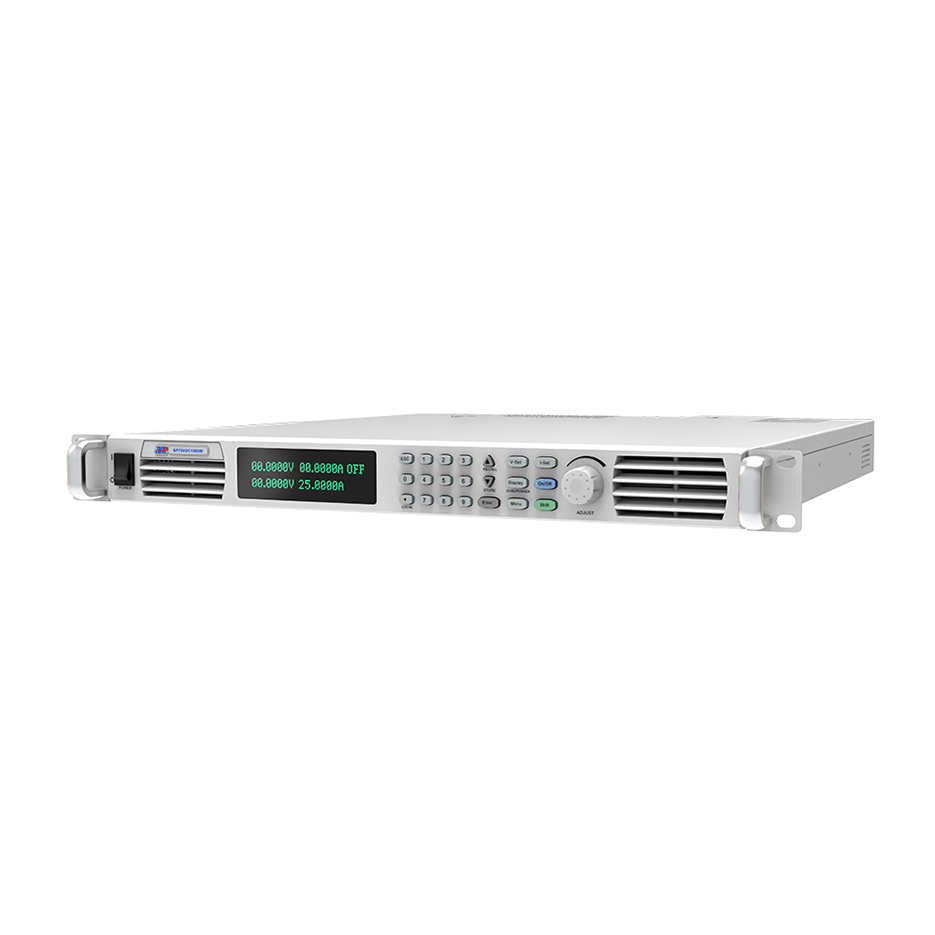
The final stage of calibration is long-duration stability testing.Allow the power supply to run continuously at a fixed voltage and load for several hours.Monitor voltage drift,temperature rise,and output stability.Professional labs often document this data for internal quality control.A High Precision DC 32V Lab Power Supply should maintain exceptional consistency during prolonged operation,proving its suitability for continuous industrial and research applications.
Properly testing and calibrating a 32V high precision power supply boosts the reliability of all downstream equipment.Whether your business focuses on PCB design,automotive electronics,battery testing,or prototyping,routine calibration prevents accidental damage,reduces failure rates,and improves testing accuracy.For companies looking to improve efficiency and maintain international standards,investing time in calibration is a small step that yields long-term benefits in product quality and customer trust.