

The automotive industry has undergone a significant transformation in recent years,with increasing demand for advanced driver-assistance systems,electric vehicle technology,and high-performance onboard electronics.As vehicles become more sophisticated,the power requirements for testing electronic components have also evolved.This is why the 32V output standard has become widely used across automotive testing environments,and why a High Precision DC 32V Lab Power Supply is now considered an essential tool for engineers working with modern vehicle systems.
Many people may wonder why automotive engineers rely on 32V instead of more common voltages such as 12V or 24V.Traditionally,vehicles operated on a 12V system for basic lighting,ignition,and small electronic loads.However,as the number of electronic devices expanded—ranging from infotainment systems to radar sensors and control modules—higher voltage standards became necessary.The transition to 24V and now 32V enables engineers to test components under realistic operating conditions,especially for vehicles equipped with high-power ECUs and electric actuators.
A 32V system provides sufficient overhead for transient spikes and safety margins.Automotive environments are known for generating voltage fluctuations during cranking,acceleration,or regenerative braking.To simulate these conditions accurately,engineers use a High Precision DC 32V Lab Power Supply capable of delivering stable voltage even when testing components under dynamic loads.This level of precision is crucial when evaluating sensitive modules such as ADAS controllers,LiDAR units,motor drivers,and power distribution boards.
Another reason 32V is common in automotive electronics testing is the need to simulate worst-case scenarios.Many electronic components in modern vehicles must remain functional even when exposed to voltage surges.Testing at higher voltages ensures components can tolerate real-world challenges,enhancing long-term reliability and safety.A high-quality 32V lab power supply can reproduce controlled voltage spikes,dips,and noise patterns that reflect actual driving environments.By observing how ECUs behave under these conditions,engineers can identify weaknesses before mass production.
The 32V standard also aligns with global shifts toward more energy-efficient electrical architectures.Electric vehicles and hybrid cars often use high-voltage battery packs combined with low-voltage subsystems.Testing these subsystems requires a flexible power source that can switch between stable low-voltage output and higher stress-test voltages.With a High Precision DC 32V Lab Power Supply,laboratories can perform multiple categories of automotive electronics validation using a single device,reducing cost and improving workflow efficiency.
Current capacity is another advantage.As automotive components draw more power—particularly sensors,pumps,and communication units—engineers need a power supply that can deliver consistent current without voltage drop.The 32V range offers improved energy delivery,making it ideal for endurance testing,long-hour operation,and rapid prototyping.A stable 32V supply helps ensure that devices behave the same way they would in a real vehicle,minimizing unexpected failures during road tests.
Furthermore,high-precision 32V power supplies allow engineers to evaluate heat generation,electromagnetic interference,and overall circuit stability.Automotive electronics must operate in harsh environments with extreme temperatures,vibration,and electromagnetic noise.During testing,the ability to precisely control the input voltage helps engineers analyze how small variations affect system reliability.Even a slight voltage shift can cause communication failures in CAN bus networks or malfunction in safety-critical modules.This is why precision is more important than nominal voltage—accuracy ensures consistent,repeatable results.
The push toward intelligent vehicles also increases the demand for reliable testing equipment.Functions such as autonomous driving,real-time data processing,and sensor fusion depend heavily on stable power supply performance during development.A High Precision DC 32V Lab Power Supply supports these needs by providing clean,low-noise output suitable for validating algorithms,verifying PCB integrity,and measuring sensor accuracy.Noise-sensitive components like camera modules and radar transceivers especially benefit from low-ripple power sources during product development.
Finally,global automotive standards and testing protocols frequently specify voltage limits close to the 32V range.Manufacturers aiming for compliance with ISO,SAE,and OEM-specific guidelines often require testing equipment that can deliver precise voltage levels with minimal deviation.The 32V standard fits neatly into these requirements,making it a universal reference point for laboratories around the world.
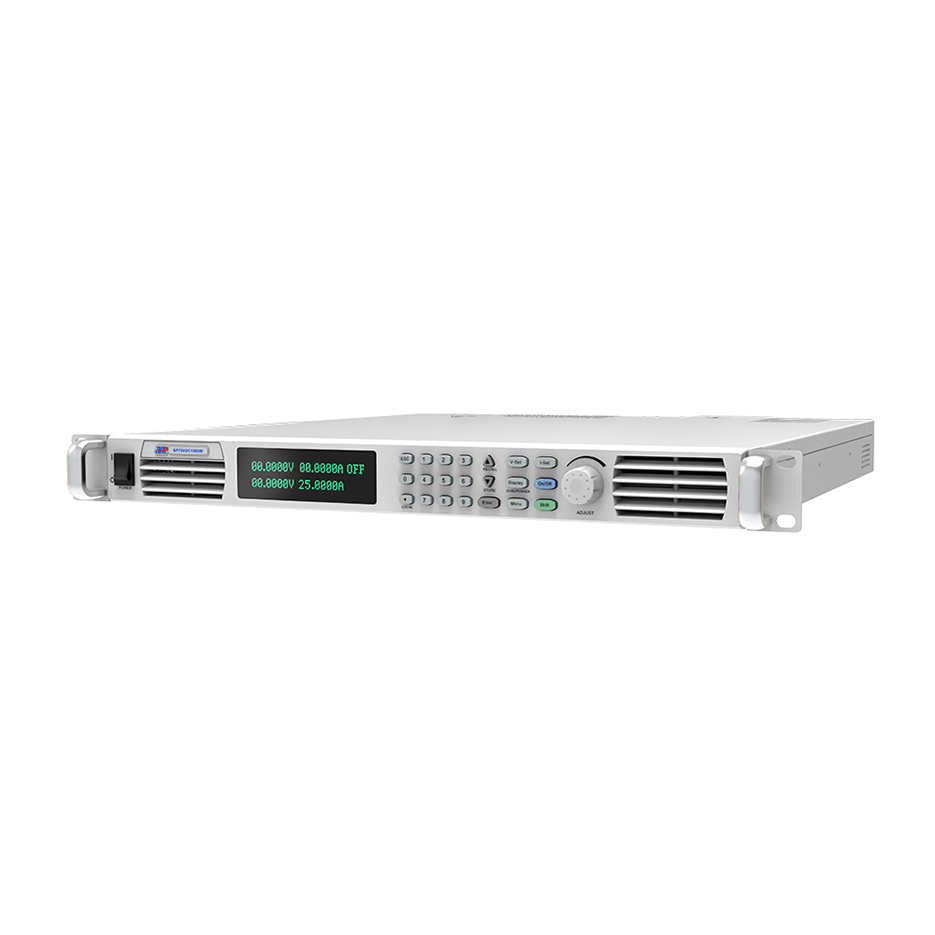
In conclusion,the widespread use of 32V in automotive electronics testing is driven by evolving vehicle technology,increasing power demands,and the need for accurate simulation of real-world operating conditions.As automotive systems continue to advance,engineers require tools that can support higher performance,improved stability,and tighter tolerances.A High Precision DC 32V Lab Power Supply is not just convenient—it has become a fundamental part of every modern automotive testing bench.Its ability to deliver clean,stable,and adjustable voltage empowers engineers to design safer,more reliable,and more intelligent vehicles for the future.