

Choosing the right power supply is crucial for anyone working in electronics,testing,or laboratory environments.Two of the most commonly used devices are the High Precision Lab Power Supply and the Bench Power Supply.While they may appear similar at first glance,there are significant differences that affect performance,accuracy,and application suitability.Understanding these differences will help engineers and hobbyists make informed decisions and ensure optimal results in their projects.
A DC Lab Power Supply is a versatile tool that provides a stable DC voltage output for testing circuits,powering devices,or calibrating instruments.Among lab power supplies,high precision models stand out due to their extremely low voltage and current tolerance.A 32V Lab Power Supply,for instance,can be adjusted to deliver precise voltage to a variety of electronic devices,from simple prototypes to complex laboratory experiments.The high precision variants are designed for applications where even minor fluctuations can cause significant errors,making them ideal for research labs,calibration facilities,and high-end electronics development.
In contrast,a standard Bench Power Supply offers flexibility and general-purpose utility.Bench units often provide adjustable voltage and current over a wide range and are suitable for routine testing,hobby projects,or educational use.While they are highly functional,their accuracy may not meet the stringent requirements of sensitive instruments or calibration tasks.Typical bench power supplies have a tolerance range that is sufficient for most tasks but may not be suitable when absolute precision is necessary.
One of the main differences between a High Precision Lab Power Supply and a bench unit lies in the control and monitoring features.High precision devices often include advanced digital interfaces,programmable settings,and fine adjustment capabilities.These features allow engineers to set exact voltage and current values,store multiple configurations,and maintain consistent output over time.In contrast,bench power supplies,particularly older analog models,may lack these advanced options,which can lead to minor deviations during extended experiments.
Another critical factor is output stability.A 32V Lab Power Supply designed for high precision operation ensures minimal ripple and noise,which is essential when testing sensitive electronics.Bench power supplies,while stable for general applications,may exhibit more ripple or minor voltage fluctuations,which could affect sensitive components or lead to inconsistent test results.Engineers working in high-stakes environments,such as semiconductor testing or medical device development,often prioritize high precision lab power supplies for this reason.
Environmental factors also play a role in distinguishing these devices.Temperature variations,humidity,and electrical interference can all impact the performance of a power supply.High precision DC Lab Power Supply units are built to compensate for such environmental influences,often featuring temperature compensation,enhanced thermal management,and noise reduction technologies.Bench power supplies are generally more tolerant of environmental fluctuations but may not maintain the same level of output fidelity under challenging conditions.
In terms of usability,bench power supplies are user-friendly and cost-effective,making them ideal for educational purposes,hobbyists,or general lab work.High precision lab power supplies,on the other hand,are an investment for professionals who need guaranteed accuracy,repeatability,and reliability.They are often used in conjunction with data acquisition systems,testing rigs,or automated calibration setups,where precise voltage and current delivery is crucial.
Ultimately,the choice between a High Precision Lab Power Supply and a bench model depends on the specific application.For tasks that demand exact voltage control,minimal ripple,and reliable repeatability,a 32V Lab Power Supply with high precision capabilities is the preferred solution.For general experimentation,prototyping,or educational labs,a bench power supply provides sufficient functionality at a lower cost.
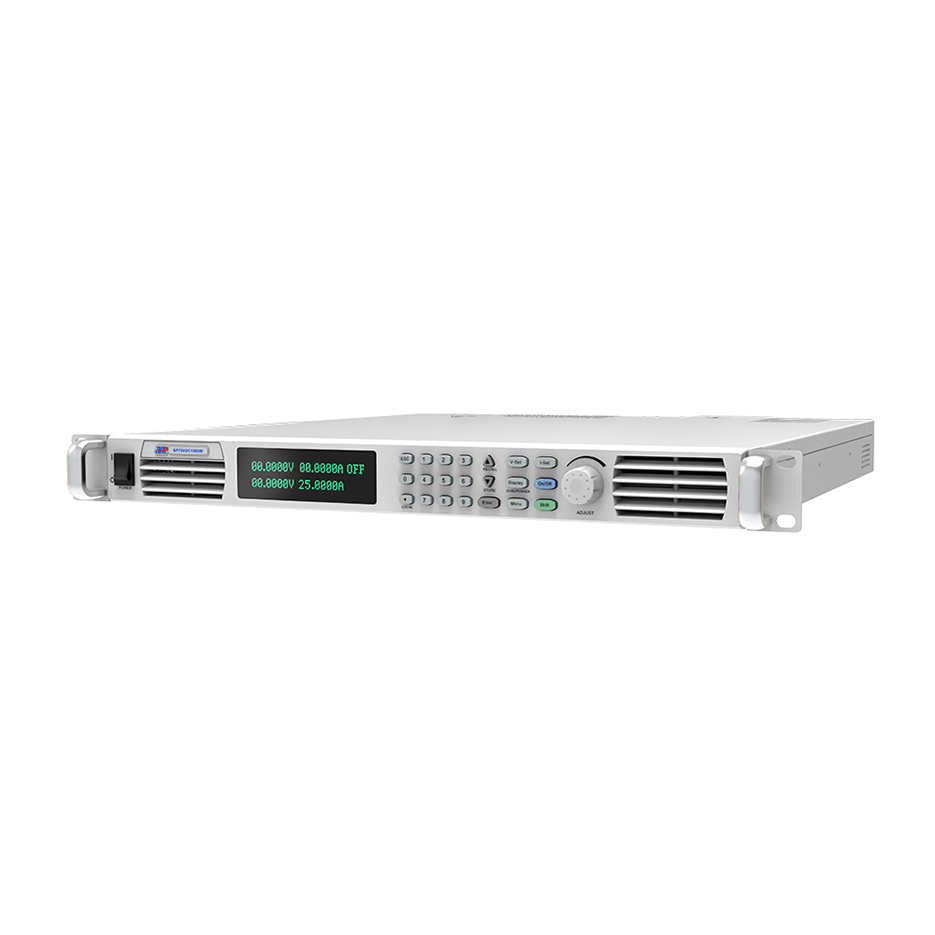
In conclusion,understanding the differences between these two types of power supplies ensures that engineers,technicians,and hobbyists select the right tool for the job.While both devices serve as essential instruments in the lab,a High Precision DC Lab Power Supply offers superior accuracy,stability,and control,making it indispensable for critical testing and development tasks.Choosing the right power supply not only improves efficiency but also protects sensitive electronics,enhances test reliability,and supports professional-grade experimentation.