

When selecting a laboratory power solution,one of the most common questions engineers and purchasing managers face is whether a single output or multi-output design is more suitable for their application.This decision directly affects testing efficiency,system stability,and long-term cost control.In modern laboratories,especially those involved in electronics development,education,and industrial testing,the Laboratory DC switching power supply has become a preferred choice due to its efficiency,compact size,and flexible control capabilities.
Understanding the fundamental difference between single output and multi-output laboratory power supplies is the first step toward making the right investment.
A single output laboratory DC power supply provides one independent voltage and current output.This type of power supply is widely used in scenarios where only one circuit or device needs to be powered at a time.It offers a simple structure,straightforward operation,and high reliability.Engineers often prefer single output units when conducting precision testing,prototype validation,or component-level debugging,where stable and adjustable power is critical.
On the other hand,a multi-output laboratory DC power supply integrates two or more independent outputs within a single unit.Each output can typically be adjusted separately,allowing different voltage or current levels to be supplied simultaneously.This makes multi-output solutions especially attractive for complex systems that require multiple power rails,such as analog and digital circuits,embedded systems,or communication modules.
From a practical standpoint,laboratories focusing on R&D often benefit from the flexibility of a Laboratory DC switching power supply with multiple outputs.Instead of using several separate power supplies,a single multi-output unit can reduce bench clutter,simplify wiring,and improve workflow efficiency.This is particularly important in environments where space is limited and multiple experiments are conducted in parallel.
However,single output power supplies still hold a strong position in the market.Their simpler internal design often translates into better performance stability and lower output interference.For applications requiring extremely low ripple,precise voltage regulation,or sensitive measurements,a single output laboratory DC switching power supply can deliver superior results.Additionally,single output models are usually more cost-effective,making them a practical option for laboratories with budget constraints or standardized testing procedures.
Multi-output power supplies,while versatile,may introduce certain trade-offs.The outputs share a common chassis and internal power architecture,which can lead to increased complexity in isolation and load regulation.In high-precision applications,this may require additional filtering or careful configuration to avoid cross-interference between channels.That said,modern Laboratory DC switching power supply designs have significantly improved isolation performance,making multi-output units increasingly reliable for professional use.
Another important consideration is scalability.If a laboratory frequently changes test setups or works on a variety of products,a multi-output power supply offers greater adaptability.Engineers can power multiple subsystems simultaneously without reconfiguring equipment.In contrast,laboratories with a fixed testing routine often prefer single output units because they are easier to maintain and replace.
Energy efficiency is another factor influencing the decision.Switching power supplies are known for their high efficiency compared to linear designs.Whether single or multi-output,a laboratory DC switching power supply minimizes energy loss and heat generation,which is beneficial for long-term operation.Multi-output models can further optimize energy usage by consolidating multiple power needs into one system.
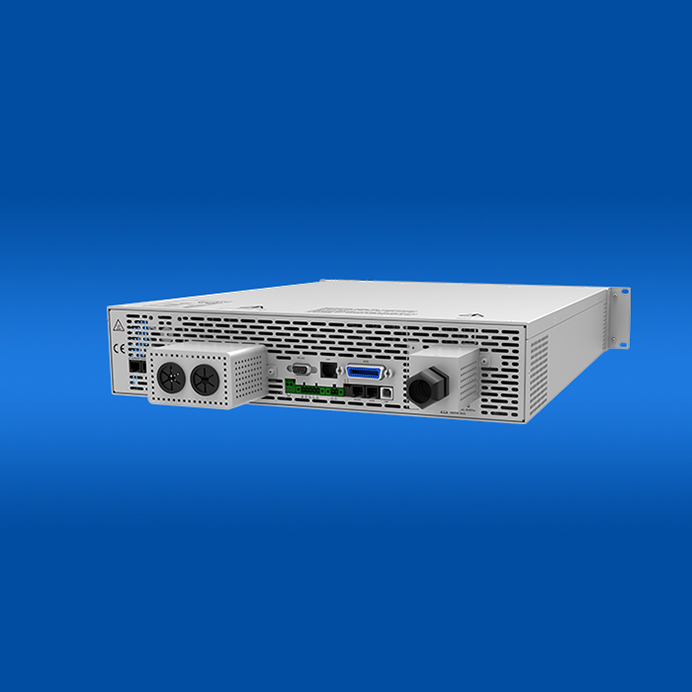
When evaluating long-term costs,it is also essential to consider maintenance and upgrade requirements.Single output units are easier to troubleshoot and replace individually.If one unit fails,it does not affect other test channels.In contrast,a failure in a multi-output power supply could impact multiple outputs simultaneously,potentially disrupting several experiments at once.This risk can be mitigated by choosing high-quality manufacturers with proven reliability and comprehensive protection features.
Ultimately,the choice between single output and multi-output laboratory DC power supplies depends on application complexity,budget,space availability,and performance requirements.There is no one-size-fits-all answer.For precision-focused testing and cost-sensitive environments,single output solutions remain highly effective.For multifunctional labs seeking flexibility and efficiency,multi-output systems provide clear advantages.
By carefully assessing real-world usage scenarios and technical demands,laboratories can select a Laboratory DC switching power supply configuration that supports both current projects and future expansion.