

University laboratories play a critical role in education,research,and technological innovation.From undergraduate teaching labs to advanced research facilities,reliable and flexible power solutions are essential for supporting experiments across electronics,physics,automation,and engineering disciplines.In recent years,the Laboratory DC power supply has become increasingly popular in university settings due to its efficiency,safety features,and adaptability.
One of the primary reasons universities adopt DC power supplies is their versatility.Teaching laboratories often host a wide range of experiments,from basic circuit analysis to microcontroller development and power electronics research.A laboratory DC power supply allows instructors and students to adjust voltage and current easily,making it suitable for both introductory and advanced applications without the need for multiple specialized devices.
Safety is a major concern in educational environments,especially when students with varying levels of experience are involved.Modern laboratory DC power supplies are equipped with comprehensive protection mechanisms,including over-voltage,over-current,short-circuit,and thermal protection.These features significantly reduce the risk of equipment damage and personal injury,making them ideal for classroom use.
Another advantage of using a Laboratory DC power supply in university laboratories is energy efficiency.Universities typically operate laboratories for long hours,sometimes across multiple semesters.DC power supplies consume less power and generate less heat than traditional linear supplies,helping institutions reduce energy costs and maintain a comfortable working environment.Lower heat output also contributes to longer equipment lifespan and reduced maintenance requirements.
In research laboratories,flexibility and precision are equally important.Researchers often work with sensitive electronic components,sensors,and prototypes that require stable and adjustable DC power.Advanced laboratory DC power supplies offer precise voltage and current control,low ripple,and programmable features that support automated testing and data collection.These capabilities are particularly valuable in graduate-level research and industry-funded projects.
Space efficiency is another key consideration in university labs,where bench space is often shared among multiple users.DC power supplies are typically more compact and lightweight than linear models,allowing laboratories to optimize space utilization.A single Laboratory DC power supply can often replace several bulky power units,simplifying laboratory layout and improving workflow.
Universities also benefit from the scalability of DC power supply solutions.As academic programs evolve and new courses or research directions are introduced,laboratories must adapt quickly.Modular and programmable DC power supplies can be easily integrated into new setups,supporting a wide range of voltages,currents,and experimental requirements without significant additional investment.
From a teaching perspective,using laboratory DC power supplies helps students gain exposure to industry-relevant equipment.Most modern industrial and commercial systems rely on DC power technology.Familiarity with these systems prepares students for real-world engineering challenges and enhances the practical value of laboratory courses.
Maintenance and operational reliability are also important factors for educational institutions.High-quality laboratory DC power supplies are designed for continuous operation and minimal maintenance.Clear digital displays,intuitive controls,and robust construction make them suitable for frequent use by multiple users.When sourced from reliable manufacturers,these power supplies provide consistent performance over many years.
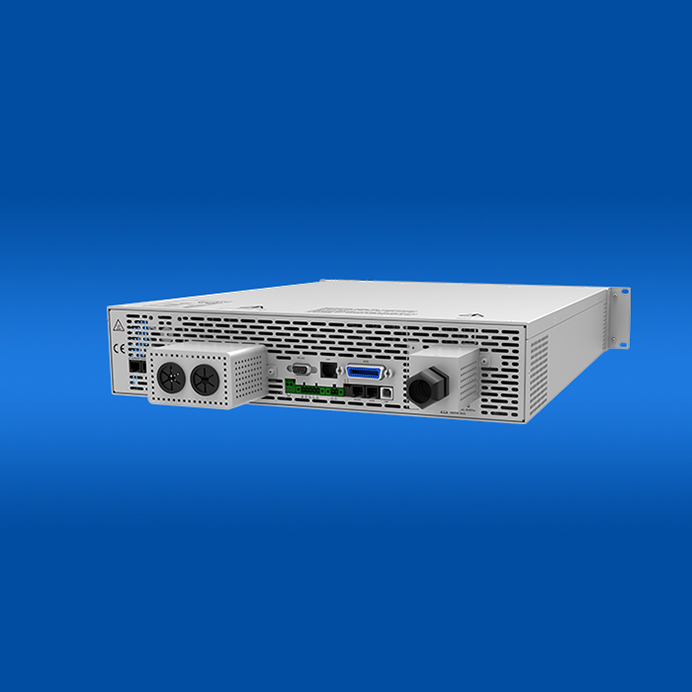
In addition,many modern units support remote control and digital communication interfaces,enabling integration with laboratory management systems or automated test platforms.This is particularly useful in advanced university laboratories where experiments are increasingly data-driven and software-controlled.
In conclusion,the adoption of Laboratory DC power supply solutions in university laboratories offers clear advantages in terms of safety,efficiency,flexibility,and educational value.Whether for teaching basic electronics or supporting cutting-edge research,these power supplies provide a reliable foundation for academic experimentation and innovation.By investing in high-quality DC power technology,universities can create safer,more efficient,and future-ready laboratory environments.