

In electronics development and circuit debugging,protecting sensitive components on a printed circuit board(PCB)is a critical task.Engineers often power a newly designed board for the first time during testing,and any design error such as a short circuit,incorrect soldering,or wrong component placement can cause excessive current.If the current is not controlled,it may instantly damage chips,resistors,or other components.This is why using a DC Power Supply with current limiting is widely recommended in electronics laboratories and production environments.
A DC Power Supply provides a stable and adjustable voltage source for testing electronic circuits.Unlike a simple power adapter,laboratory DC power supplies allow engineers to control both voltage and current.One of the most important functions is current limiting,which ensures that the current flowing through the PCB does not exceed a preset value.
This relationship explains why current can increase dramatically when resistance drops.In a faulty PCB,a short circuit may reduce resistance close to zero.As a result,the current can rise rapidly and burn traces or destroy integrated circuits.By setting a current limit on the DC Power Supply,engineers can prevent this situation and protect the circuit board during testing.
When using a DC Power Supply to protect PCBs,engineers typically start by setting the correct voltage according to the board’s design specifications.Next,they adjust the current limit slightly above the expected operating current of the circuit.For example,if the circuit normally consumes 0.5A,the current limit may be set to around 0.6A.This ensures that the circuit operates normally while still providing protection if an abnormal condition occurs.
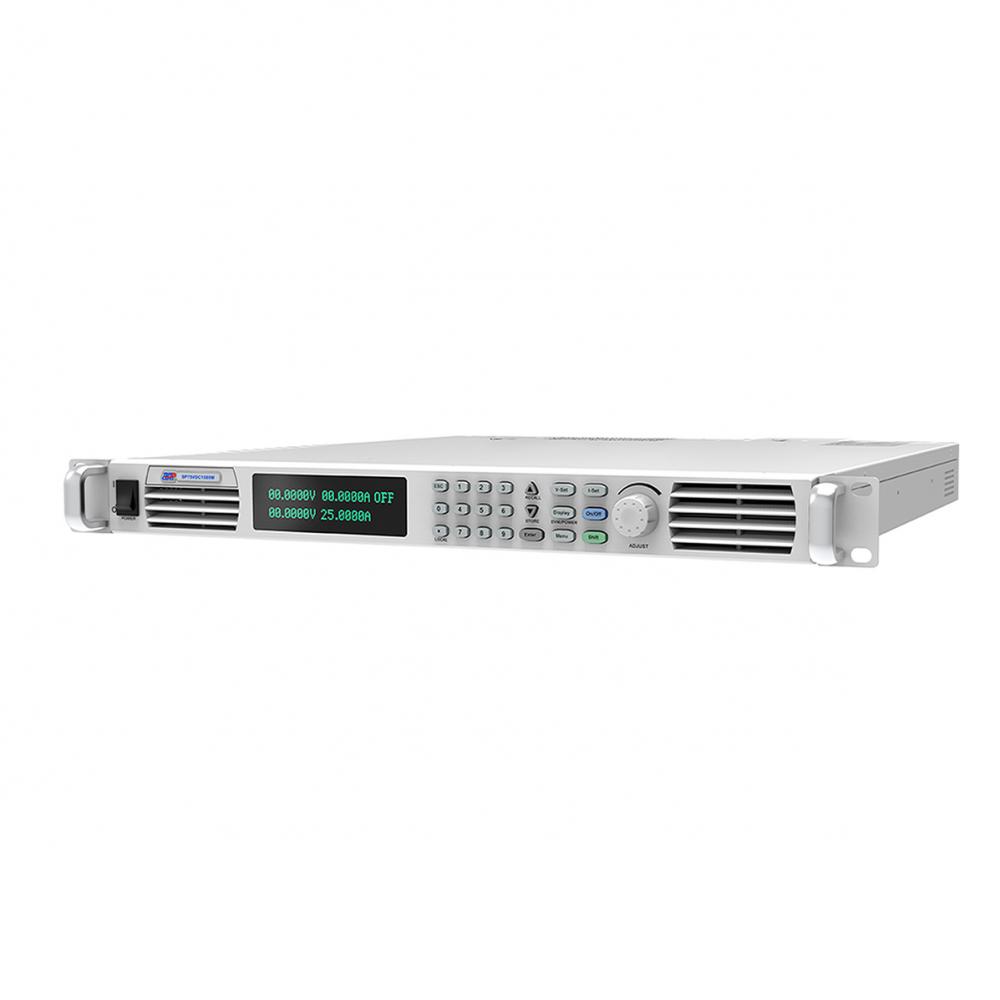
Another recommended practice is to power up the PCB gradually.Engineers often start with a lower voltage and slowly increase it while observing the current reading on the DC Power Supply.If the current immediately reaches the limit,this usually indicates a potential problem such as a short circuit or incorrect wiring.At this point,the engineer can stop the test and inspect the PCB before any damage occurs.
Using a DC Power Supply with current limiting provides several benefits during PCB testing.It helps protect expensive electronic components,improves safety in the laboratory,and reduces the risk of costly development failures.This method is especially important when working with microcontrollers,semiconductor chips,or complex multi-layer circuit boards.
Today,many electronics manufacturers and research laboratories rely on high-precision DC Power Supply systems for PCB development,electronic component testing,and product verification.With accurate voltage control,adjustable current limits,and stable output performance,a quality DC power supply becomes an essential tool for ensuring safe and reliable circuit testing.