
However, despite its advantages, a DC Source System also has several limitations and disadvantages that engineers and buyers need to consider before selection and deployment. These disadvantages are mainly related to cost, complexity, efficiency limitations in certain scenarios, and operational constraints.
1. High Initial Investment Cost
One of the most significant disadvantages of a DC Source System is its high purchase cost.
Compared with traditional DC power supplies, DC Source Systems are more advanced and include programmable control, high precision regulation, and complex protection functions. These features significantly increase manufacturing and development costs.
For industrial-grade systems used in high-power applications such as battery testing or renewable energy simulation, the price can be very high. This creates a barrier for small laboratories, startups, or companies with limited budgets.
In addition to the initial purchase cost, users may also need to invest in:
- Cooling systems
- Power distribution infrastructure
- Calibration equipment
- Maintenance tools
As a result, the total cost of ownership is relatively high.
2. Complex System Operation and Setup
DC Source Systems are not simple plug-and-play devices. They require proper configuration, parameter setting, and system integration.
Operators often need technical knowledge in:
- Power electronics
- Electrical engineering
- Control systems
- Testing procedures
Incorrect configuration can lead to inaccurate test results or even equipment damage.
For example, improper voltage setting during battery testing may cause:
- Overcharging
- Thermal instability
- Reduced battery lifespan
- Safety risks
Therefore, trained personnel are required, which increases operational complexity and labor cost.
3. Limited Suitability for High-Frequency Dynamic Loads
Although DC Source Systems are highly stable, some models may have limitations when dealing with extremely fast dynamic load changes.
In advanced applications such as electric vehicle motor simulation or fast-switching power electronics testing, the system must respond quickly to sudden load variations.
Lower-end or older DC Source Systems may experience:
- Response delay
- Voltage ripple under fast load transitions
- Reduced accuracy in transient simulation
This makes them less suitable for certain high-speed dynamic testing environments unless advanced models are used.
4. Heat Generation and Cooling Requirements
DC Source Systems handling medium to high power levels generate significant heat during operation.
This requires:
- Forced air cooling or liquid cooling systems
- Controlled operating environments
- Proper ventilation in laboratories
If heat is not managed properly, it may lead to:
- Reduced efficiency
- Component aging
- System shutdown due to thermal protection
Cooling infrastructure adds both cost and maintenance requirements.
5. Maintenance and Calibration Requirements
To ensure accuracy and long-term reliability, DC Source Systems require regular maintenance and calibration.
Over time, factors such as component aging, temperature variations, and heavy usage can affect output precision.
Maintenance may include:
- Calibration of voltage and current output
- Replacement of internal components
- Firmware updates
- System diagnostics
This increases operational overhead and requires technical support or manufacturer assistance.
6. Size and Space Requirements
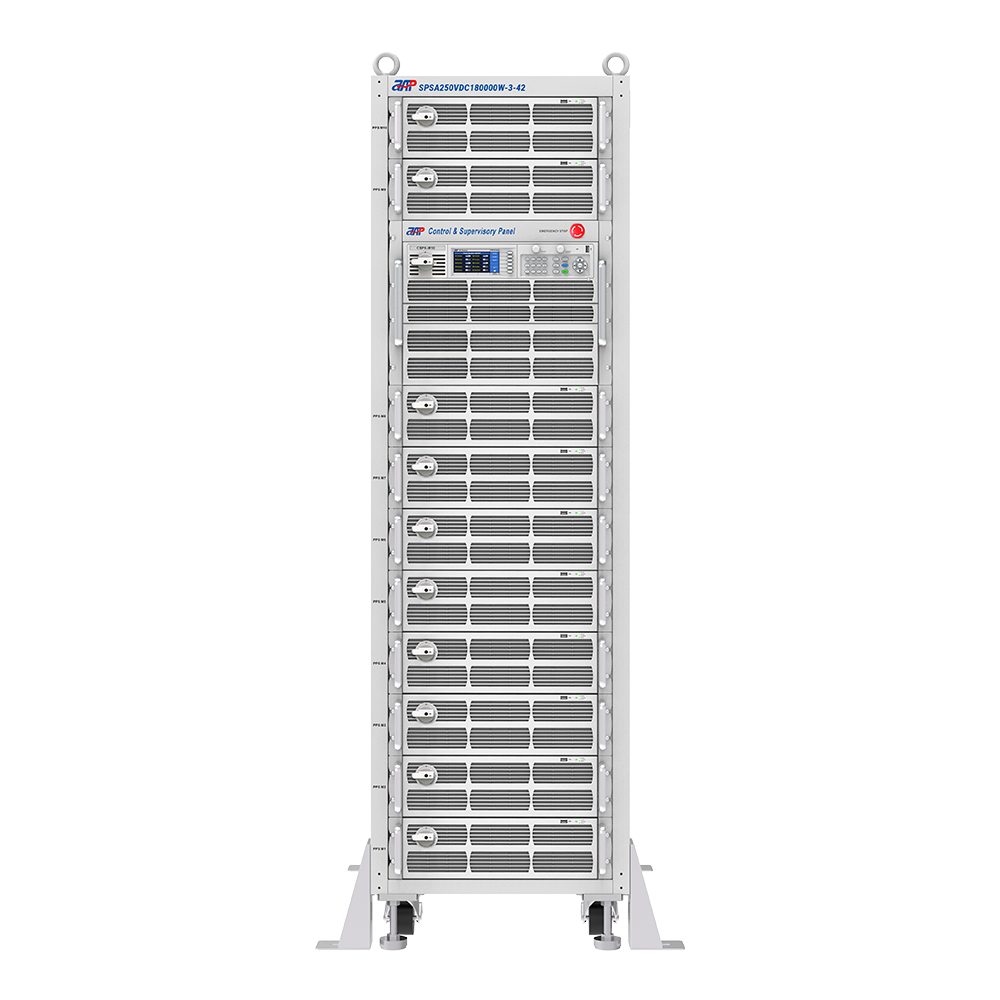
High-power DC Source Systems are often large and heavy. Industrial-grade models may require dedicated installation space in laboratories or testing facilities.
This can be a disadvantage for:
- Small research labs
- Mobile testing environments
- Space-limited production facilities
In addition, installation may require specialized electrical infrastructure, such as high-capacity wiring and circuit protection systems.
7. Efficiency Limitations in Certain Applications
Although DC Source Systems are efficient in controlled testing environments, they are not energy generation devices and may introduce energy losses during operation.
In high-power applications, conversion losses and heat dissipation can reduce overall efficiency.
This makes them less suitable for:
- Continuous energy supply applications
- Cost-sensitive large-scale power distribution systems
They are primarily designed for testing and simulation, not direct energy delivery.
8. Dependence on Skilled Technical Personnel
Another disadvantage is the need for experienced engineers or technicians.
Proper use of a DC Source System requires understanding of:
- Electrical load behavior
- System programming
- Safety protocols
- Test environment design
Without skilled personnel, there is a higher risk of:
- Incorrect test results
- Equipment misuse
- Safety hazards
This increases training costs for companies adopting the technology.
While DC Source Systems are essential tools in modern renewable energy, electric vehicle, and industrial testing applications, they also come with several disadvantages.
The main limitations include high cost, complex operation, maintenance requirements, cooling needs, and dependence on skilled operators. Additionally, they may not be ideal for extremely fast dynamic load testing or large-scale energy supply applications.
Despite these drawbacks, their precision, stability, and programmability make them indispensable in research, development, and validation environments. Understanding these disadvantages helps users make better decisions when selecting and implementing DC Source Systems in industrial applications.