
What Is a DC Source System?
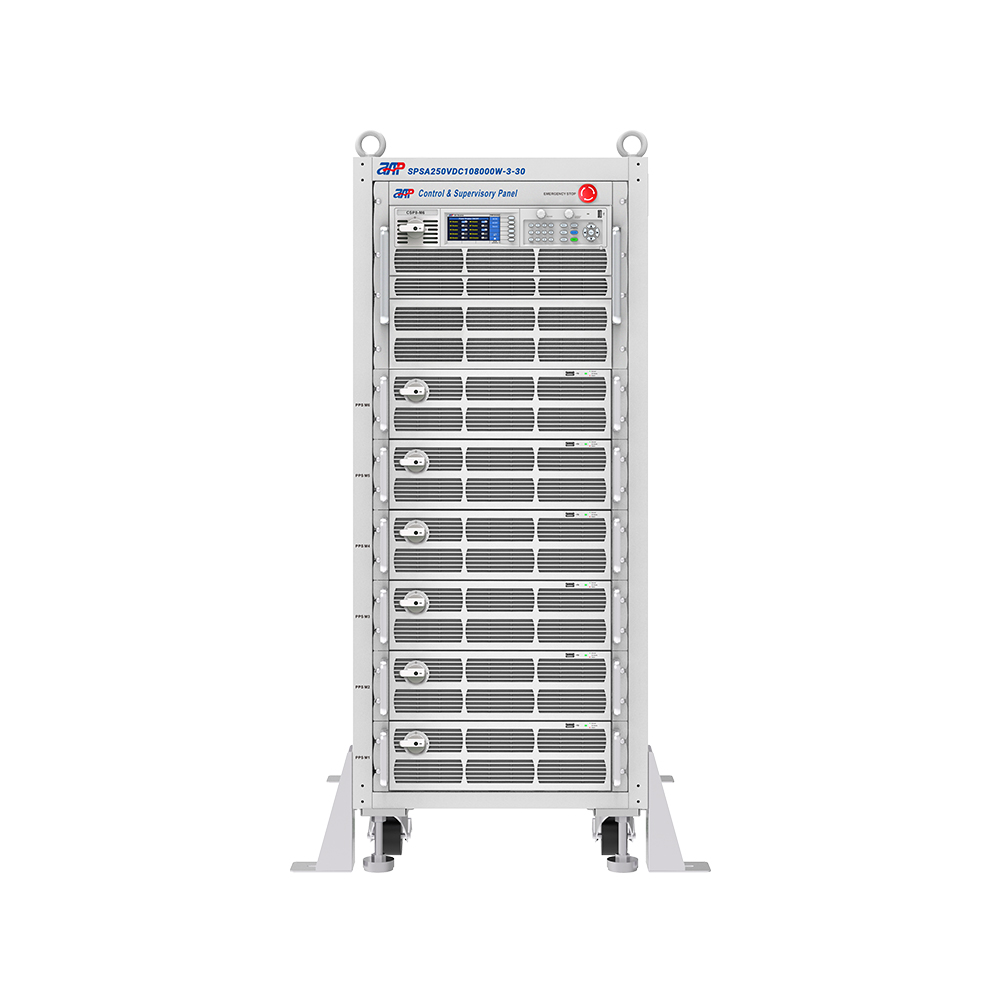
A DC Source System is a programmable power device designed to provide stable and controllable direct current (DC) output. It is widely used in industrial testing, power electronics development, and energy system simulation.
Compared with traditional DC power supplies, a DC Source System offers higher precision, programmable control functions, and the ability to simulate complex real-world operating conditions.
Key characteristics include stable voltage and current output, high accuracy, built-in protection functions such as overvoltage and overcurrent protection, and flexible programming capabilities for different testing scenarios.
Because of these advantages, DC Source Systems are widely used in renewable energy development, battery testing, and power electronics validation.
Can DC Source Systems Be Used in Renewable Energy Applications?
Yes. DC Source Systems are widely used in renewable energy applications, especially in system simulation, performance testing, and laboratory validation.
They are not energy generation devices, but they are essential tools for designing, testing, and optimizing renewable energy systems such as solar power, wind power, and battery energy storage systems.
DC Source System in Solar Energy Applications
Solar power systems naturally generate DC electricity, which makes DC Source Systems highly suitable for solar-related applications.
They are commonly used to simulate photovoltaic (PV) panel output in controlled laboratory environments. Engineers use them to test solar inverters, controllers, and power conversion systems under different conditions.
They also play an important role in supporting Maximum Power Point Tracking (MPPT) development, allowing engineers to optimize energy harvesting efficiency. In addition, DC Source Systems are used for testing solar charging systems and battery integration.
DC Source System in Wind Energy Systems
Although wind turbines produce alternating current (AC), the power is usually converted into DC during the power conversion process.
DC Source Systems are used to simulate DC link behavior in wind energy systems and to test power electronic components such as rectifiers and inverters.
They help engineers evaluate system stability, energy conversion efficiency, and performance under varying load conditions. This makes them important tools in wind power system development and validation.
DC Source System in Battery Energy Storage Systems (BESS)
Battery energy storage systems are one of the most important application areas for DC Source Systems.
They are widely used for charging and discharging battery packs in controlled environments. Engineers rely on them to simulate real-world battery behavior, including different load conditions and operating states.
DC Source Systems are also used for lithium-ion battery testing, including cycle life testing, aging analysis, and safety verification. In electric vehicle development and grid energy storage systems, they are essential for performance validation and reliability testing.
DC Source System in Power Electronics and Inverter Testing
Renewable energy systems depend heavily on power electronic devices such as inverters and DC-DC converters.
DC Source Systems provide stable and programmable DC input for testing these devices. Engineers use them to simulate voltage fluctuations, evaluate conversion efficiency, and analyze system response under dynamic load conditions.
They are also used to test thermal performance and electrical stress behavior, which is critical for improving the reliability of renewable energy systems.
DC Source System in Microgrids and Hybrid Energy Systems
Modern renewable energy systems often combine multiple energy sources such as solar, wind, and battery storage into hybrid systems.
DC Source Systems are used to simulate DC bus structures in microgrids and to support system integration testing. They help engineers study energy management strategies and improve the stability of distributed energy systems.
As microgrid technology continues to develop, DC Source Systems are becoming increasingly important in smart energy system design.
Advantages of DC Source Systems in Renewable Energy Applications
DC Source Systems provide several important advantages in renewable energy applications.
They offer high precision and stable output, which is essential for accurate testing. Their programmable functions allow engineers to simulate real-world operating conditions. They also provide a safe and controlled environment for high-power testing.
In addition, they support advanced research and development in renewable energy systems and are compatible with modern energy architectures such as grid-connected systems and energy storage networks.
Industrial Applications and Manufacturers
DC Source Systems are widely used in renewable energy equipment manufacturing, battery testing laboratories, electric vehicle research and development centers, and power electronics industries.
Many DC Source System manufacturers and suppliers provide customized solutions based on voltage range, power capacity, and application requirements. These systems are designed to support both laboratory research and industrial-scale testing.
FAQ
Can DC Source Systems simulate solar panel output?
Yes. They are commonly used to simulate photovoltaic system behavior in laboratory testing environments.
Are DC Source Systems used in electric vehicle battery testing?
Yes. They are widely used for battery charging, discharging, and performance validation in EV development.
What industries use DC Source Systems?
They are mainly used in renewable energy, electric vehicles, battery manufacturing, power electronics, and industrial testing applications.