

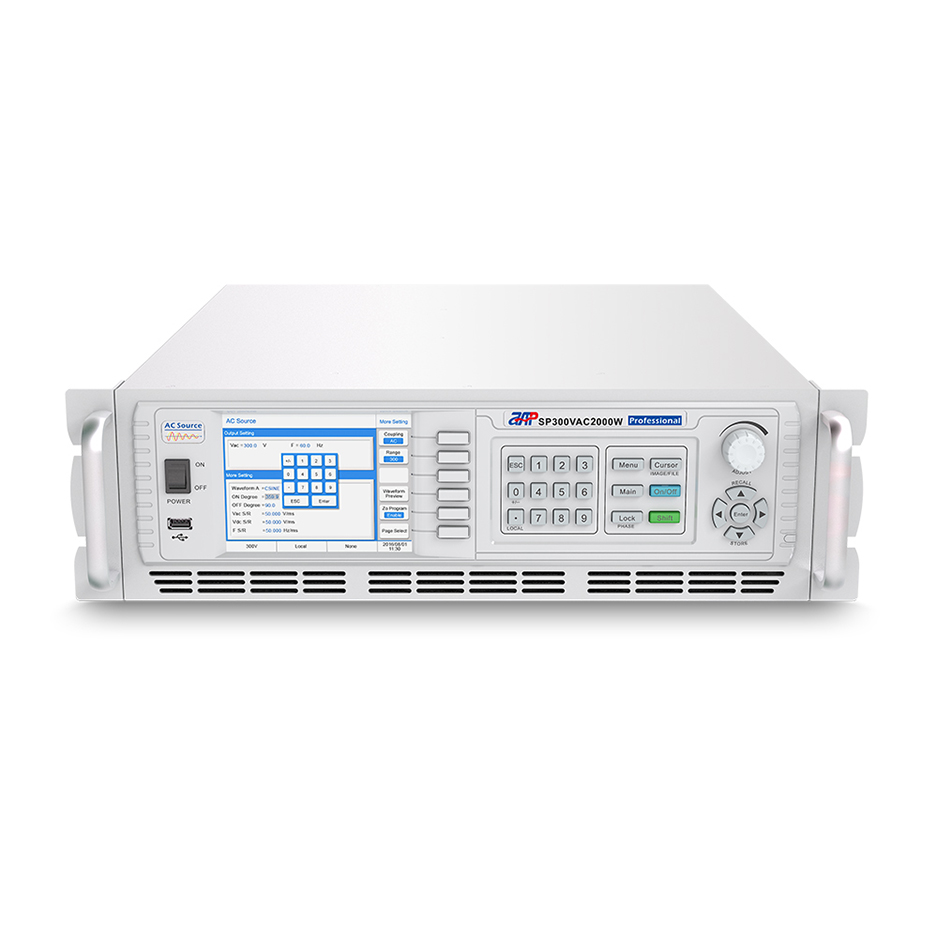
Precision Output for Accurate Testing
One of the defining features of an APM Power Supply is its high output precision. Engineers often work with sensitive electronic components that require stable voltage and current throughout the testing process. Even small fluctuations can influence measurement accuracy or product performance.
A high-quality Programmable Power Supply minimizes ripple and output deviation, ensuring repeatable test results. This level of precision is particularly valuable when evaluating semiconductors, communication devices, automotive electronics, and research equipment.
Whether replacing a traditional DC Power Supply or supporting advanced laboratory applications, an APM Power Supply helps maintain consistent electrical performance under varying load conditions.
Flexible Programmable Control
Unlike fixed-output power sources, an APM Power Supply allows users to configure voltage, current, power limits, and testing sequences according to specific project requirements.
Through programmable settings, engineers can:
- Adjust voltage and current automatically
- Store multiple testing profiles
- Execute repeated test cycles
- Simulate different operating environments
- Improve testing efficiency
This flexibility is one of the main reasons many manufacturers choose a Programmable Power Supply for product development and quality verification.
Automation reduces manual intervention while increasing consistency across production and laboratory testing.
Support for Multiple Operating Modes
Another important feature of an APM Power Supply is its ability to operate in different control modes.
Most models support:
- Constant Voltage (CV)
- Constant Current (CC)
- Constant Power (CP)
- Constant Resistance (CR) on selected models
These operating modes allow one power supply to perform a variety of testing tasks without changing equipment.
For example, battery charging may begin in constant current mode before switching to constant voltage operation, while electronic component evaluation may require constant power output throughout the testing cycle.
This versatility makes the Programmable Power Supply suitable for industries with diverse testing requirements.
Fast Dynamic Response
Electronic devices rarely operate under fixed loads. Many systems experience rapid changes in current demand, especially in automotive electronics, communication equipment, and industrial automation.
An APM Power Supply is designed with fast transient response, allowing it to quickly stabilize output after sudden load variations.
Fast response improves testing accuracy by providing power conditions that closely match real operating environments. Engineers can evaluate product performance more effectively without waiting for slow voltage recovery.
Compared with a standard DC Power Supply, advanced programmable models typically offer superior dynamic performance for demanding applications.
Intelligent Protection Functions
Safety and equipment protection are essential in every testing environment.
An APM Power Supply integrates multiple protection features that help prevent damage to both the power source and the device under test.
Common protection functions include:
- Over Voltage Protection (OVP)
- Over Current Protection (OCP)
- Over Power Protection (OPP)
- Over Temperature Protection (OTP)
- Short Circuit Protection
These intelligent protection systems automatically monitor operating conditions and respond when abnormal situations occur, reducing the possibility of equipment failure and minimizing downtime.
Remote Communication and System Integration
Modern laboratories increasingly rely on automated testing systems.
An APM Power Supply often supports multiple communication interfaces such as USB, LAN, RS232, RS485, CAN, and GPIB, allowing remote operation through computer software or integrated control platforms.
Engineers can monitor output parameters, collect testing data, adjust operating conditions, and control multiple instruments simultaneously.
These communication capabilities simplify automated production testing while improving operational efficiency.
Wide Range of Applications
The versatility of an APM Power Supply allows it to replace or complement both traditional DC Power Supply and AC Power Supply solutions across many industries.
Typical applications include:
- Battery charging and discharging tests
- Electric vehicle component testing
- Solar inverter evaluation
- Semiconductor verification
- Industrial automation
- Aerospace electronics
- Research laboratories
- University teaching laboratories
- Consumer electronics testing
- Power supply development
Many programmable models can also simulate different electrical conditions, helping engineers validate product performance before mass production.
High Efficiency and Stable Performance
Energy efficiency is another valuable feature of an APM Power Supply.
Advanced power conversion technology reduces energy loss while maintaining stable output over long operating periods. Efficient thermal management also helps extend equipment life and maintain reliable operation during continuous testing.
Compared with conventional power supplies, a modern Programmable Power Supply offers greater flexibility without sacrificing stability or accuracy.
As testing requirements become increasingly complex, reliable power performance becomes an important factor in improving overall productivity.
The key features of an APM Power Supply include precision output, programmable control, multiple operating modes, fast dynamic response, intelligent protection, remote communication, and excellent long-term stability. These capabilities make it far more flexible than a conventional DC Power Supply or AC Power Supply, allowing engineers to perform accurate, repeatable, and automated testing across numerous industries. By combining reliability with advanced control functions, an APM Power Supply has become an important tool for laboratories, manufacturing facilities, research organizations, and product development teams seeking dependable and efficient power solutions.