

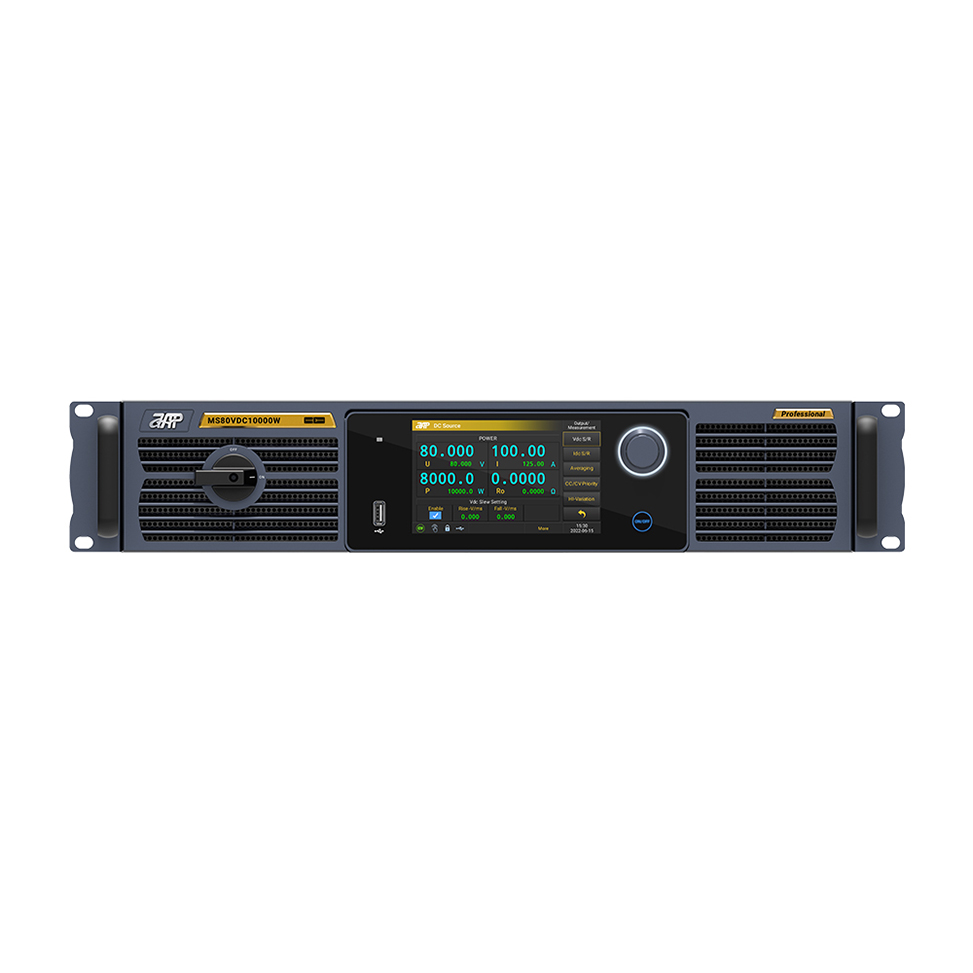
A Programmable DC Power Supply is designed to provide adjustable and precise DC output, but the ideal voltage and current range depends heavily on how and where it will be used. Understanding these requirements before purchasing can save time, money, and future replacement costs.
In most applications, voltage range determines whether the power supply can support the device under test, while current range determines whether it can operate safely and continuously under load. Both parameters must be evaluated together rather than in isolation.
For low-power electronics testing, such as PCB validation, sensors, or microcontroller-based designs, a lower voltage range—often between 0–30V—is usually sufficient. These applications typically draw modest current, making a Programmable DC Power Supply with a current range of 3A to 5A adequate. Precision and stability matter more here than raw power output, so buyers often prioritize fine resolution and low ripple over high current capability.
As applications move into industrial or automotive electronics, voltage requirements often increase. Systems such as motor controllers, in-vehicle electronics, or industrial control units may require voltage ranges of 60V, 80V, or even higher. In these cases, current demand also rises, especially during startup or load transitions. Selecting a Programmable DC Power Supply with sufficient headroom ensures stable output and prevents overcurrent shutdowns during peak demand.
Battery testing is another area where voltage and current range selection becomes critical. Different battery chemistries and pack configurations require different voltage profiles. For example, lithium-ion battery testing may require precise voltage control within a narrow range, while current capability must be high enough to support fast charging and discharging cycles. A Programmable DC Power Supply used for battery testing should offer flexible current limits and smooth transition between constant voltage and constant current modes.
Production line testing introduces yet another set of considerations. In high-throughput environments, the power supply must not only meet voltage and current requirements but also sustain them continuously. Underrated current capacity can lead to thermal stress, reduced lifespan, and inconsistent test results. In these scenarios, engineers often select a Programmable DC Power Supply with a higher current rating than the nominal requirement to ensure reliability under continuous operation.
One common mistake is choosing the maximum voltage and current “just in case.” While flexibility is important, excessive overspecification increases cost, size, and power consumption. Instead, buyers should evaluate their current application needs and consider moderate future expansion. A well-chosen Programmable DC Power Supply balances present requirements with realistic growth expectations.
Resolution and accuracy also play a role in effective voltage and current selection. A wide voltage range with poor resolution may not provide the control needed for sensitive electronics. High-quality Programmable DC Power Supply models offer fine adjustment steps across their full output range, ensuring both low-voltage precision and high-voltage stability.
Another factor often overlooked is output power, which is the product of voltage and current. Even if a power supply meets voltage and current requirements individually, its total power rating must support the intended load. Modern Programmable DC Power Supply designs increasingly feature auto-ranging capability, allowing flexible combinations of voltage and current within a fixed power envelope. This makes them especially attractive for laboratories and R&D environments with diverse testing needs.
In practical terms, selecting the right voltage and current range starts with clearly defining the application. Understanding the maximum operating voltage, peak current draw, duty cycle, and future testing scenarios provides a solid foundation for decision-making. A reliable Programmable DC Power Supply should comfortably operate within these limits without frequent stress at maximum ratings.
Ultimately, the correct voltage and current range is not about choosing the largest numbers available, but about selecting a Programmable DC Power Supply that delivers stable, accurate, and efficient performance for your specific application. By aligning specifications with real-world requirements, buyers can ensure long-term reliability and optimal return on investment.