

In modern electronics development,accurate power simulation is critical for product reliability.Engineers often need to replicate real-world battery conditions during testing.This raises an important question:can a Programmable DC source simulate battery behavior in lab testing?The answer is yes.With advanced control features and precise voltage regulation,a Programmable DC source can effectively mimic battery characteristics and provide stable power conditions for laboratory experiments.
A battery is not simply a constant voltage supply.In real applications,battery output changes based on load,discharge cycles,temperature,and internal resistance.When engineers test electronic devices such as IoT modules,automotive control units,or consumer electronics,they must simulate these dynamic conditions.This is where a Programmable DC source becomes a valuable tool.
Unlike traditional fixed-output power supplies,a Programmable DC source allows engineers to adjust voltage,current,and output sequences through programmable settings.This capability makes it possible to replicate battery charging curves,discharge profiles,and voltage fluctuations.For example,engineers can program the device to gradually decrease voltage over time,simulating the natural discharge process of lithium-ion batteries.
Another advantage of a Programmable DC source is its high precision and stability.In laboratory testing environments,even small variations in power can affect measurement accuracy.A programmable system provides fine voltage resolution and accurate current control,ensuring repeatable testing results.This is particularly important when validating sensitive electronics such as sensors,microcontrollers,and communication modules.
Battery simulation is also essential in automotive electronics testing.Modern vehicles rely heavily on electronic control units(ECUs),infotainment systems,and advanced driver assistance systems.These components must operate reliably under different battery conditions,including voltage drops during engine start or fluctuations caused by electrical loads.By using a Programmable DC source,engineers can simulate these real-world scenarios in a controlled laboratory environment.
Furthermore,a Programmable DC source can support automated testing workflows.Through software programming or external control interfaces,engineers can create complex voltage sequences that replicate real battery behavior.For example,the power supply can simulate cold-cranking voltage drops,sudden load changes,or battery recovery stages.This automation significantly improves testing efficiency and reduces manual intervention.
Another important benefit is safety and flexibility.Using actual batteries for repeated testing may introduce safety risks,especially when dealing with high currents or unstable battery chemistries.A laboratory-grade Programmable DC source eliminates these risks while still delivering realistic power simulation.Engineers can test multiple scenarios without worrying about battery degradation or hazardous conditions.
In addition,modern Programmable DC source systems often include monitoring and data logging features.These capabilities allow engineers to track voltage,current,and power output in real time.The collected data helps researchers analyze device performance under simulated battery conditions and identify potential design issues early in the development process.
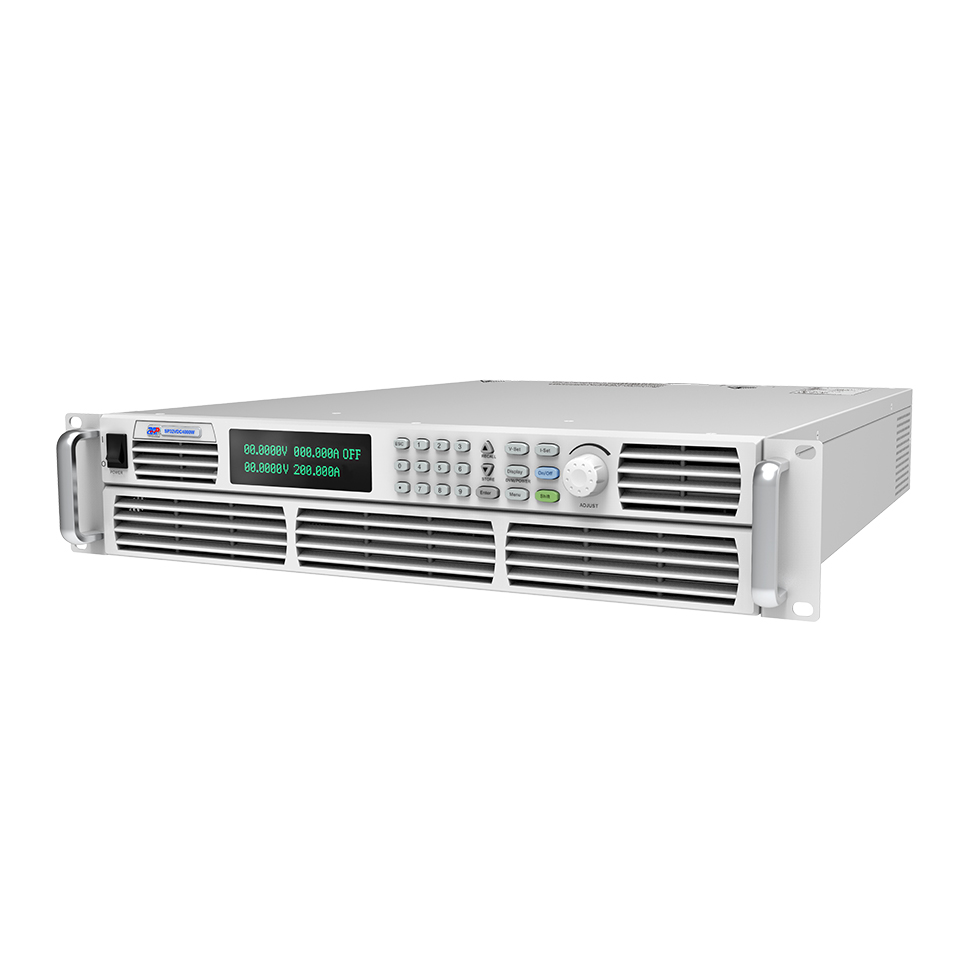
As electronic systems become more complex,the need for reliable testing equipment continues to grow.Whether in consumer electronics,industrial devices,or automotive applications,power simulation plays a crucial role in product validation.A high-quality Programmable DC source provides the flexibility,precision,and automation needed to accurately simulate battery behavior in laboratory testing.
In conclusion,a Programmable DC source is an effective and reliable solution for battery simulation in lab environments.Its programmable output,high accuracy,and automation capabilities make it an essential tool for engineers working in electronics development and testing laboratories.By replacing real batteries with programmable power systems,engineers can conduct safer,more controlled,and more efficient testing processes.