
As electronic testing becomes increasingly automated,engineers are looking for more efficient ways to control power equipment.One common question in laboratories and testing environments is:how to control a Programmable DC source using software or a remote interface?With modern communication technologies,controlling a Programmable DC source remotely has become a standard feature in many testing systems.
Traditionally,power supplies were operated manually through front-panel knobs or buttons.While this approach works for basic testing,it is not suitable for automated test environments or complex experiments.Today,a Programmable DC source can be integrated into computer-controlled systems,allowing engineers to configure voltage,current,and output sequences through software commands.
One of the most common control methods for a Programmable DC source is through communication interfaces such as USB,LAN,RS232,or GPIB.These interfaces enable the power supply to connect directly to a computer or test controller.Once connected,engineers can use specialized software or programming languages to send commands that adjust output parameters in real time.
For example,in a laboratory testing setup,engineers may use software platforms such as LabVIEW,Python scripts,or proprietary control software to operate a Programmable DC source.Through these programs,users can set voltage levels,define current limits,and create automated test sequences.This allows the power supply to follow predefined test procedures without manual intervention.
Automation is one of the biggest advantages of software-controlled power supplies.With a Programmable DC source,engineers can schedule voltage changes,simulate power fluctuations,and execute repeated test cycles automatically.This is especially useful for long-duration reliability testing,where devices must operate under varying power conditions for extended periods.
Remote control also improves testing accuracy and repeatability.When engineers manually adjust power settings,human error may introduce inconsistencies in the test results.However,when a Programmable DC source is controlled through software commands,the same test parameters can be applied repeatedly with precise consistency.
Another benefit of remote interface control is integration with automated test systems.In advanced laboratories,multiple instruments such as oscilloscopes,electronic loads,and signal generators are often used together.By connecting a Programmable DC source to the same control system,engineers can synchronize power output with other testing equipment.This coordinated control improves overall testing efficiency and enables more complex measurement scenarios.
Data monitoring is also easier when using software-controlled power systems.Many modern Programmable DC source devices support real-time feedback,allowing engineers to monitor voltage,current,and power levels through software dashboards.These monitoring features help researchers quickly detect abnormal conditions and adjust test parameters if necessary.
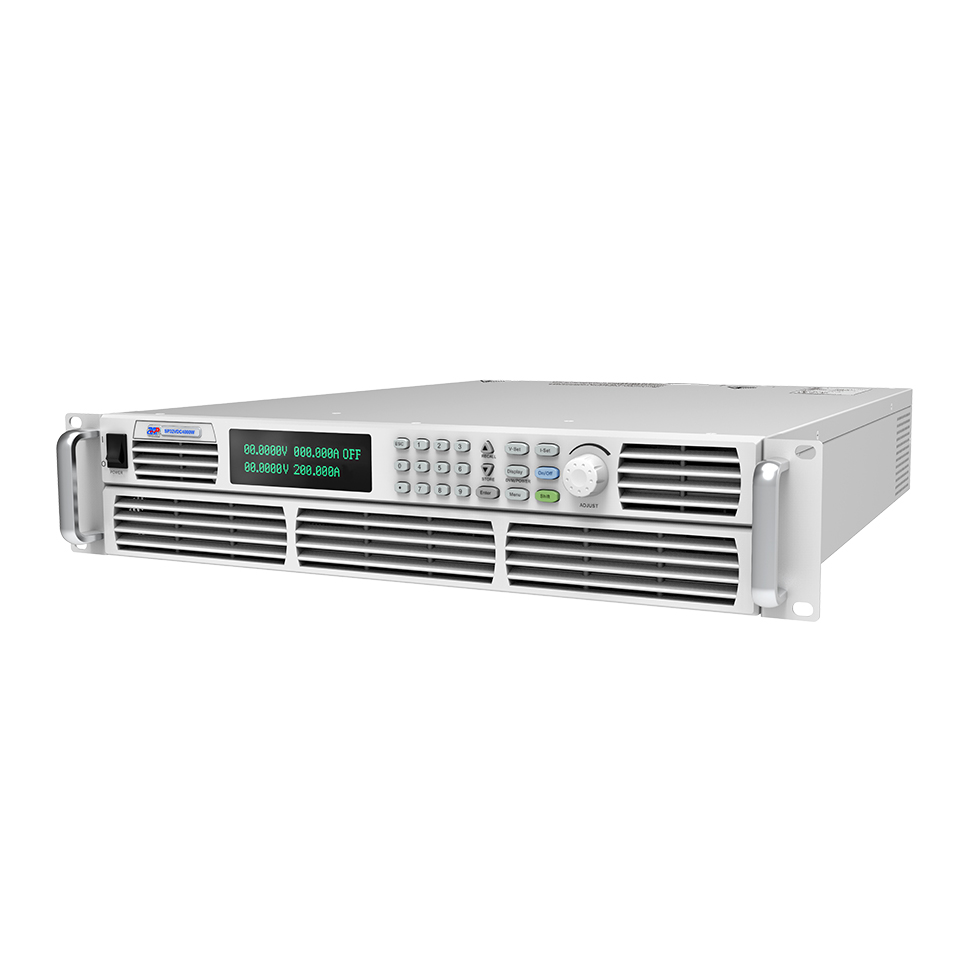
Security and remote accessibility are additional advantages.In large testing facilities or industrial laboratories,engineers may need to control equipment from different locations.With network-enabled interfaces,a Programmable DC source can be accessed remotely through secure connections,enabling engineers to operate the system without being physically present at the test bench.
The combination of programmable control and remote interfaces makes modern power supplies highly versatile tools.Whether used in electronics research,automotive testing,or industrial product validation,a Programmable DC source offers flexible integration with digital control systems.
In conclusion,controlling a Programmable DC source through software or remote interfaces greatly enhances testing efficiency,accuracy,and automation.By integrating programmable power supplies into computer-controlled systems,engineers can perform complex testing procedures with minimal manual effort.As laboratory testing continues to evolve toward automation,a Programmable DC source will remain an essential component of modern electronic testing environments.